Sustainability is something we are encouraged to think about in every aspect of our lives. As the UK’s leading residential architectural practice, we're constantly keeping our eyes and ears open for positive industry alternatives that ensure your dream home can be designed and built sustainably, without compromising quality.
To help you explore your eco-options, we asked our team to tell us what green materials they've been finding on construction sites...
Woodcrete
As the name suggests, woodcrete (or timbercrete) is an alternative form of concrete. It is much better for the environment due to its manufacturing process, which replaces some of the more energy-intensive components of normal concrete with recycled wood. This is then either used in place of normal concrete, or is used to create ICF (Insulated Concrete Framework) bricks, used like any other hollow concrete block in the walls of your build. The bricks are then filled with the woodcrete mixture to great effect.
As well as being a sustainable alternative, ICF woodcrete bricks have many other benefits. Their low energy manufacturing process means they are generally cheaper than traditional building materials. Their thermal efficiency is also better than those of traditional concrete solutions, meaning you’ll cut costs on your energy bills. Shipping costs are also cut as they are manufactured in the UK, which is good for the environment too.
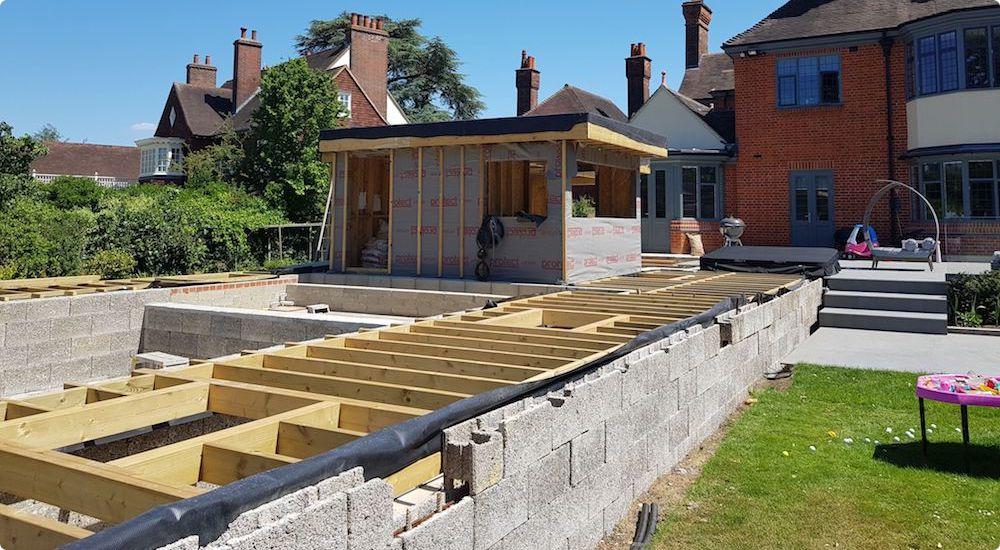
These ICF woodcrete bricks are something that have featured in Resi projects before. This large pool house project used Durisol ICF woodcrete bricks with reinforcing bars to create the walls of the pool structure. As well as meeting the client’s wishes to build sustainably, this alternative also saved him money.
Cork
While you might think cork is only useful for plugging up bottles of bubbly, it is in fact a very versatile construction material notable for its sustainability and eco-efficiency. As a bark, it can be harvested from a tree without killing it, allowing for the tree to continue producing cork every year. This also means cork can be produced without diminishing forests, which themselves are highly efficient in retaining greenhouse gasses - the main source of climate change. A further benefit of Cork is it is fully recyclable, meaning many cork products can be reclaimed and reused. You don’t get much eco-friendlier than that!
Cork’s use in construction varies due to its mix of properties. Its unique structure, filled with air pockets, make it a great insulator of sound and heat, which has seen it used as insulation in ceilings, walls and flooring. As a wood, you might think of cork as flammable and susceptible to rot, but it is actually mold and fire retardant, which makes it safer than some traditional construction materials. If maintained properly, cork is extremely durable, and not to mention waterproof! Why else would we trust it to bottle up our lovely wine?